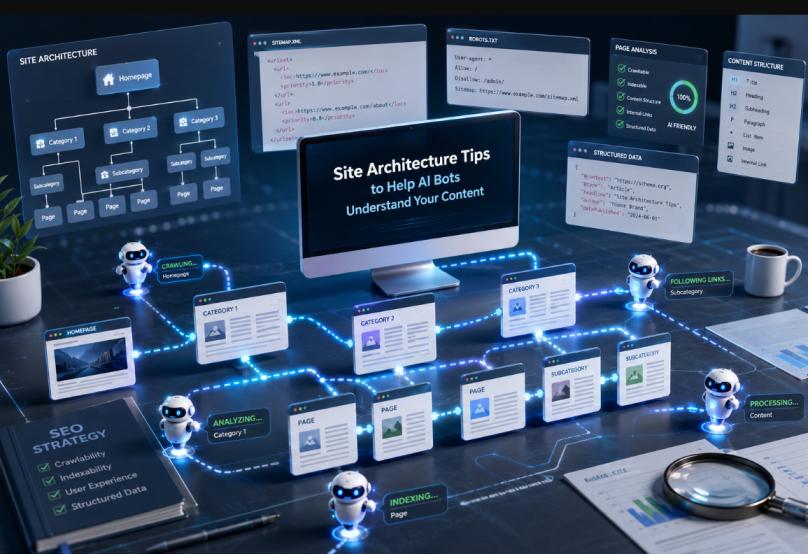
As search technology evolves, websites need to cater to more than just human visitors. AI-powered search systems analyse how pages are organised and connected to understand your content. A clear site structure helps search engines crawl your website more efficiently while making it easier for visitors to find the information they need.
Even the most well-made website won’t achieve much if people and search engines struggle to find it. A well-organised website gives every page a better chance of being discovered. For businesses investing in SEO services in Sydney, a logical website structure is just as important as the content itself.
This guide explores practical site architecture tips that improve crawlability, navigation, and overall search visibility, helping AI bots better understand your content.
Why Site Architecture Matters for AI Search
Website architecture refers to the way pages are organised and connected throughout your website. Think navigation menus, categories, internal links, URLs, and the overall information hierarchy.
AI bots use your website’s structure to work out things like:
- Which pages matter most
- How your content is connected
- Whether visitors can find information easily
- How simple is your website to crawl
A clear structure helps search engines move through your website more efficiently and makes it easier for visitors to navigate.
Build a Logical Website Hierarchy
A clear website hierarchy helps both visitors and AI-powered search systems understand how your content is organised.
A simple structure often looks like this:
- Home
- Category pages
- Subcategory pages (if needed)
- Service or content pages
- Supporting blog articles
Group similar pages together and keep your website structure simple. This helps visitors and search engines find important content more easily.
Keep Navigation Clear and Consistent
Navigation is one of the first areas AI bots analyse when crawling a website. Menus should remain consistent across every page and include only essential categories. Overcrowded navigation can dilute the importance of key pages and create confusion for both users and crawlers.
Clear navigation labels also provide additional context about your website’s primary topics. Good examples include descriptive titles rather than vague labels, making it easier for search engines to identify content themes.
Use Internal Linking Strategically
Internal links are among the strongest signals that help AI understand how pages relate to one another.
Every important page should receive links from relevant content elsewhere on the website. This creates topical clusters that demonstrate expertise in specific subject areas.
When linking internally:
- Use clear, descriptive anchor text.
- Link only to pages that are genuinely relevant.
- Avoid adding too many links to a single page.
- Revisit older content occasionally and link to newer, related pages where appropriate.
Done well, internal linking helps visitors discover more of your content while making it easier for search engines to navigate your website.
Create Descriptive URL Structures
URLs should be short, meaningful, and easy to understand.
Instead of using ambiguous page names, use words that describe the page’s content. A URL should immediately communicate the topic without requiring additional context.
Simple URL structures also make websites easier to maintain as they grow.
Organise Content into Topic Clusters
Group related content on the same topic rather than publishing disconnected articles. Start with a detailed guide, then support it with pages that cover specific questions or related subjects.
Connect these pages with internal links to create a clear content journey for visitors and a more organised website.
Make Every Important Page Easy to Reach
Important pages should be easy to find. Keep them within a few clicks of your homepage and use internal links to direct visitors to key information.
If a page is difficult to reach, consider simplifying your navigation or adding links from other relevant pages.

Avoid Duplicate Content
Duplicate content can make it difficult for search engines to know which page to index or rank.
Common causes include:
- Printer-friendly pages
- Multiple URLs with the same content
- Category or filter pages
- Reused service descriptions
Where duplicate pages are necessary, use canonical tags to identify the preferred version. Original content and a clear page structure make it easier for search engines to identify the right page.
Optimise Breadcrumb Navigation
Breadcrumbs help users understand where they are within a website while providing additional structural information to search engines.
A breadcrumb trail clearly shows the relationships between pages, from broader categories to individual pages.
This additional context helps AI bots understand your website’s hierarchy and how content fits together.
Maintain a Clean XML Sitemap
Keep your XML sitemap updated so search engines can quickly find new and important pages. Include only pages you want indexed. Only include valuable indexable pages to avoid wasting crawl resources.
Improve Crawl Efficiency
Large websites often contain pages that provide little value. Removing or restricting access to unnecessary pages can improve crawl efficiency. Examples include outdated archives, duplicate filters, temporary landing pages, or low-value search results. A cleaner website allows AI bots to spend more time analysing pages that genuinely matter.
Prioritise User Experience
AI systems increasingly evaluate websites through user-focused signals. A logical architecture naturally improves user experience by helping visitors quickly locate information.
Consider:
- Fast page loading
- Mobile-friendly layouts
- Simple navigation
- Clear page headings
- Readable content
- Logical internal links
When users enjoy navigating your website, AI systems often recognise those positive engagement signals as indicators of quality.
Future-Proof Your Website Structure
A well-organised website does more than improve navigation. It also helps search engines understand your content and makes it easier for important pages to be discovered.
As your website grows, review its structure regularly to keep new pages organised and connected. Small updates over time can help maintain a website that’s easy to use and ready for the changing demands of search.

3 thoughts on “Site Architecture Tips to Help AI Bots Understand Your Content”