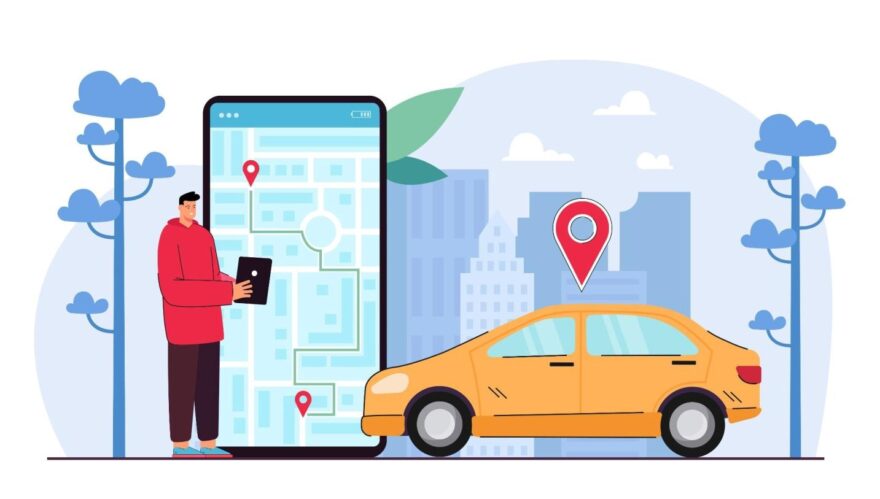
Ridesharing has become an essential element of urban transport. Individuals are using ride-hailing applications to commute to work, to the airport, and even to long-distance journeys. Although the experience is easy on the surface, the system that drives it is driven by a combination of various technologies. One of the most important among them is the Internet of Things (IoT).
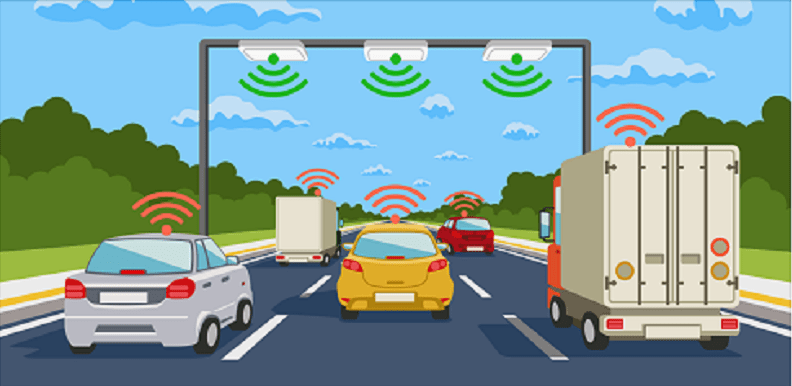
IoT links physical objects like vehicles, smartphones, and embedded sensors to the internet. These gadgets gather and share information at all times. In ridesharing, this enables platforms to monitor vehicles, control trips, performance, and enhance efficiency.
This is not a concept of the future. The IoT is already profoundly embedded in the functioning of the contemporary ridesharing platforms. Knowing its role can be used to understand why these services have been made faster, more reliable and more scalable over the years.
What IoT Really Does in Ridesharing
IoT allows the system to maintain continuous real-time communication between various components in a ridesharing arrangement. The smartphone of a driver transmits location information, the app of a passenger is updated, and the backend systems process all the information in real time.
Once a person orders a ride, the system finds nearby drivers using live location information. It then allocates the ride and estimates a time of arrival. The system keeps monitoring the vehicle during the trip and notifies the rider and the platform.
This is the essence of IoT in ridesharing, which is a continuous data exchange. It eliminates guesswork in favor of real-time accuracy.
Live Tracking and Route Optimization
One of the most noticeable benefits of IoT is real-time tracking. Riders are able to know the precise location of their driver and the time it will take the vehicle to reach them. This can be done since GPS-enabled devices are continuously transmitting location updates.
Meanwhile, route optimization is a significant factor. The system does not take a predetermined route but analyzes the traffic situation and proposes more optimal routes. This assists drivers to evade traffic jams and saves time.
The outcome is a more effective system in which drivers make more trips and riders waste less time waiting or in traffic jams.
Connected Systems to Improve Safety
Ridesharing has always been a major issue of safety. IoT enhances safety as it allows constant monitoring throughout a ride. The system is able to monitor the path being followed and compare it to the planned path. In case of a significant deviation, it can be signaled. Abrupt halts or abnormal driving behaviors can also be identified using the available data.
The passengers are able to share their trip information with others, and this provides an additional level of transparency. These features are not isolated tools but a part of a networked system that operates in real time.
Awareness of Vehicle Monitoring and Maintenance
IoT is also involved in the knowledge of vehicle conditions. Certain vehicles, particularly those operated by fleets, have sensors to monitor performance-related information. This involves simple indicators like engine status or battery status. This information can be used to detect possible problems at an early stage when it is regularly monitored.
Instead of waiting for a breakdown, maintenance can be planned in advance. This results in reduced disruptions and more dependable service. It should be noted though that this degree of monitoring is more prevalent in organized fleets than among independent drivers.
Understanding Driver Behavior
Driving behavior analysis is another field where IoT can be used. The information gathered on journeys can give information on the way vehicles are being operated.
Such patterns as frequent sudden braking or irregular changes in speed can be detected. Other platforms may internally use this information to keep service standards or direct drivers to safer driving behaviors.
Such data can be used according to the company policies and local regulations, yet the ability to do so is provided by the interconnected systems that gather real-time data.
Enhancing the User Experience
IoT makes ridesharing more predictable and transparent to a user. The possibility to see the correct arrival time, monitor the vehicle in real-time, and get updates during the trip creates trust.
Estimates of fares are also more accurate since they are not based on assumptions but on live data. This minimizes confusion and enhances satisfaction. The experience is smooth as the system is continuously updating itself in the background.
Information and Process Effectiveness
IoT creates massive amounts of data that can assist ridesharing companies in enhancing their operations. Pattern analysis helps companies to know when and where the demand is the greatest. This enables the allocation of drivers better and better coverage of services. It also facilitates price changes according to the real-time situation, but pricing strategies are multi-factorial.
The most important thing is that IoT offers the data to make informed decisions instead of making assumptions.
Environmental Impact and Efficiency
IoT indirectly leads to improved transport services and minimizes unnecessary travel, leads to smoother traffic flow and minimizes idle time.
Improved monitoring of vehicles can also be used to maintain performance, which facilitates effective fuel consumption. Connected systems can monitor battery consumption and charging requirements in situations where electric vehicles are utilized.
IoT is not a full solution to environmental issues, but it helps to support systems that strive to minimize inefficiencies.
Ridesharing App Development Solution Providers
The rise of ridesharing has provided a need to start up similar businesses. This has given birth to the emergence of firms that provide Uber-like app development solutions.
Various companies offer various degrees of service and features differ according to the scope of the project, customization, and price.
Uberclone.co
Uberclone.co is reputed to provide ready-made ridesharing software solutions. These applications are created to replicate the core functions and include the essential features of a ride-hailing application, such as passenger booking, driver management, and trip tracking.
Businesses that want to deploy a system more quickly than constructing one tend to use their solutions.
Appdupe
Appdupe offers development services to on-demand applications, such as ridesharing platforms. The company provides both clone-based and customizable solutions based on the business needs.
They are typically involved in assisting businesses to develop apps that operate in a similar manner to the existing ride-hailing applications.
Hyperlocal Cloud
Hyperlocal Cloud focuses on software solutions for location-based services. This involves ridesharing, delivery, and other on-demand services.
Their systems are tailored to businesses operating in certain geographical locations.
Elluminati
Elluminati offer on-demand solutions, such as mobility solutions and taxi booking applications. Their products typically consist of driver applications, rider applications, and administrative applications.
The company offers various solutions and the technical capabilities are different based on customization and business requirements.
Apptunix
Apptunix is a mobile application development firm that develops bespoke applications in various sectors, including ridesharing. They tend to specialize in custom solutions, unlike pure clone providers.
This implies that the end product is very much reliant on the needs of the clients. The features like real-time tracking or system integrations are applied depending on what is specified in the development.
What to Expect in the Future
IoT will continue to influence how ridesharing evolves. With the advancement in technology, systems will be more interconnected and responsive.
We can expect to be more integrated with city infrastructure, coordinate more with traffic systems, and have more sophisticated data analysis. IoT will also be essential in connected vehicles and automation.
The rate of change will be determined by infrastructure, regulations, and investment, but the trend is evident. Ridesharing innovation will continue to focus on connectivity.
Conclusion
IoT has now become an essential component of the ridesharing business. It allows tracking in real-time, increases the efficiency of operations, and makes the experience of users more enjoyable.
The technology works behind the scenes, but its impacts are experienced in all the rides that are booked, tracked, and completed without any hitches. IoT will keep on aiding improved systems, smarter choices, and more dependable services as the industry expands.

1 thought on “How IoT is Revolutionizing Ridesharing Industry”